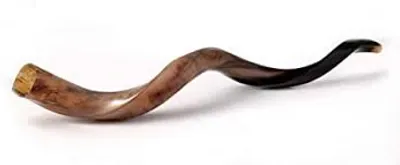
The Shofar, Hebrew for a trumpet made from a Ram’s or Kudu horn, serves as a powerful call to action in our ministry. It signals a Holy assembly and a time for repentance and proactive engagement, not just prayer. As the return of our King is imminent, the Shofars daily sound prepares us for this profound moment. Understanding the Shofar involves exploring its origins, construction from the horn of animals like rams, goats, sheep, and Kudus, and its significance in biblical festivals and rituals.
Various Shofars, such as the Ram’s Horn, Gemsbok, Sable-Antelope, Ibex, and Eland, produce distinct sounds with specific meanings. The TE’KI’AH symbolizes praise and worship, SH’VA’RIM represents repentance and brokenness, TE’RU’AH signifies warfare and victory, and TE’KI’AH GE’DO’LAH, an extended jubilant blast, marks events like the Lord’s return and expressions of thanks for His mercy and redemption.
Biblically, the Shofar is blown for worship, ushering in the presence of the Lord, making proclamations, symbolizing freedom and liberty, sounding the alarm for war, at the coronation of a king, as a call to battle and war, and for announcing and ushering in the Sabbath and festivals. The Shofar, through its varied sounds, plays a vital role in spiritual practices and reflections.
BIBLICAL BLOWING OF THE SHOFAR :
A call to gather for worship
(2 Ch 29:26-28, Ps 98:6, Ps150:3, 2 Sam 6:15)
Ushers in the presence of the Lord
(2 Sam 6:15 1 Chron 15:14)
Make proclamation
(1 Sam 13:3)
Symbolizing freedom and liberty
(Lev 25:9 & 10)
At the giving of the 10 Commandments
(Ex 19:16 & 19, Ex 20:18)
Sounds the alarm for war
(Josh 6:4 -20, Joel 2:1, Jer 4:19,21, Jer 6:1,17)
At the coronation of a king
(1 Kings 1:34)
As a call to battle and war
(Numbers 10:9)
To induce fear & confusion in the enemy
(Judges 7:22)
For announcing and ushering in the weekly Sabbath and yearly festivals